Start here
Attention. Action. Attitude.
Three questions I keep coming back to for living deliberately.
I have collected principles my whole life.
From the lab: build the control, and do not fool yourself. From investing: protect the capital first, and read the return last. From the Stoics, from my faith, from being a parent, from deals that went well and a few that did not. Each one earned its place. Each one had taught me something.
At some point the collection became the problem. You can gather so many principles for living that they become impossible to live by. Nobody reaches for a list of forty virtues in the moment that matters. In that moment you get one or two questions, if you are lucky, and whatever habits you have built.
So I started asking what sits underneath them.
Wisdom depends on seeing reality clearly. Courage depends on noticing what needs courage, and then doing something about it. Responsibility only means something once it turns into action, and discipline is what keeps the action going. Gratitude is a way of receiving what happens. Resilience is partly what you do and partly how you carry it. Curiosity is what points your attention in the first place.
Every time I traced a principle down, I landed in one of three places. Three questions:
- Attention: What is true?
- Action: What is mine to do?
- Attitude: How will I face it?
I call it AAA for short. They are also, not by accident, the three things I most want my kids to carry with them.
Underneath all of it is a bigger question: how do you use one life well? This is my best answer so far.
Attention: What is true?
Attention separates what happened from what you wish had happened.
It sounds simple. It is not, and the reason is worth understanding.
Buy a red car and you will start seeing red cars everywhere. The popular explanation, if you read much personal-development writing, is that a part of your brain called the reticular activating system filters reality to match your goals. My own training was molecular, down at the synapse, not in attention research. But I spent enough years in neuroscience to say the mechanism in that story is badly oversimplified, and the lesson underneath it is right.
The reticular activating system is real, but the popular story gives it far too much credit. It is a network in the brainstem that plays a central role in arousal: whether you are awake, how alert you are, whether something is important enough to snap you to attention. What better explains the red car is selective attention. Your brain cannot process everything in front of you, so it prioritizes, and what you expect, what you are looking for, and what you care about all shape what gets through. In a well-known 1999 experiment by the psychologists Daniel Simons and Christopher Chabris, people counted basketball passes in a short video while someone in a gorilla suit walked through the middle of the scene. Roughly half of them never saw it.
That cuts both ways. Whatever you are primed to look for gets easier to see. Whatever you are not looking for can walk through the middle of the room.
So the first question is not “what do I see?” It is “what is true?” Most of the mistakes I have made, in the lab and in deals, lived in the gap between those two. Most failures begin not with bad intentions, but with paying attention to the wrong things.
A simple practice: before an important decision, write down what you are looking for, and what would surprise you. The first shows you where your attention is pointed. The second gives the gorilla a chance to be seen.
Action: What is mine to do?
Action separates what is yours to influence from what is not.
I used to phrase this question as “what should I do?” I changed it, because “should” quietly hands you the whole world. “Mine” draws a line. The Stoics, Epictetus most directly, built an entire philosophy on that line: some things are up to us and some are not. Your effort, your standards, your decisions, your boundaries, and your next move are yours. The market, the weather, other people’s choices, and most of the past are not.
Once the line is drawn, the job is to act on your side of it. Knowledge changes nothing until it becomes behavior. Good intentions do not improve anything; implemented ideas do. A person does not become generous by approving of generosity, or courageous by admiring courage. Action is where values become visible.
The trap for analytical people, and I am one, is treating more analysis as a form of action. Past a certain point, more research stops reducing uncertainty and starts postponing the decision. Many questions only answer themselves after you move. The scientist’s version is the experiment: you do not think your way to an answer at the bench; you design a test small enough to afford and clear enough to learn from, and you run it. Outside a lab the question is the same. What is the smallest action that would teach me something real?
It took me a long time to understand that you rarely feel ready. Ready is not a feeling. It is a decision. What you feel are the blockers: the fears and the risks. Naming them, and planning for them, is most of what we mean when we say we feel ready. Even then there are no guarantees. Sometimes you just have to jump.
One of my first syndications as a general partner taught me that. We had significant earnest money in the deal, and partway through the acquisition it went hard, meaning it was no longer refundable. Once our funds were locked in, we uncovered a problem that could have sunk the sale and cost us the deposit: sagging floors in some of the upper units. It was scary. We investigated, and determined that the floors were stable and the settling was within an acceptable range.
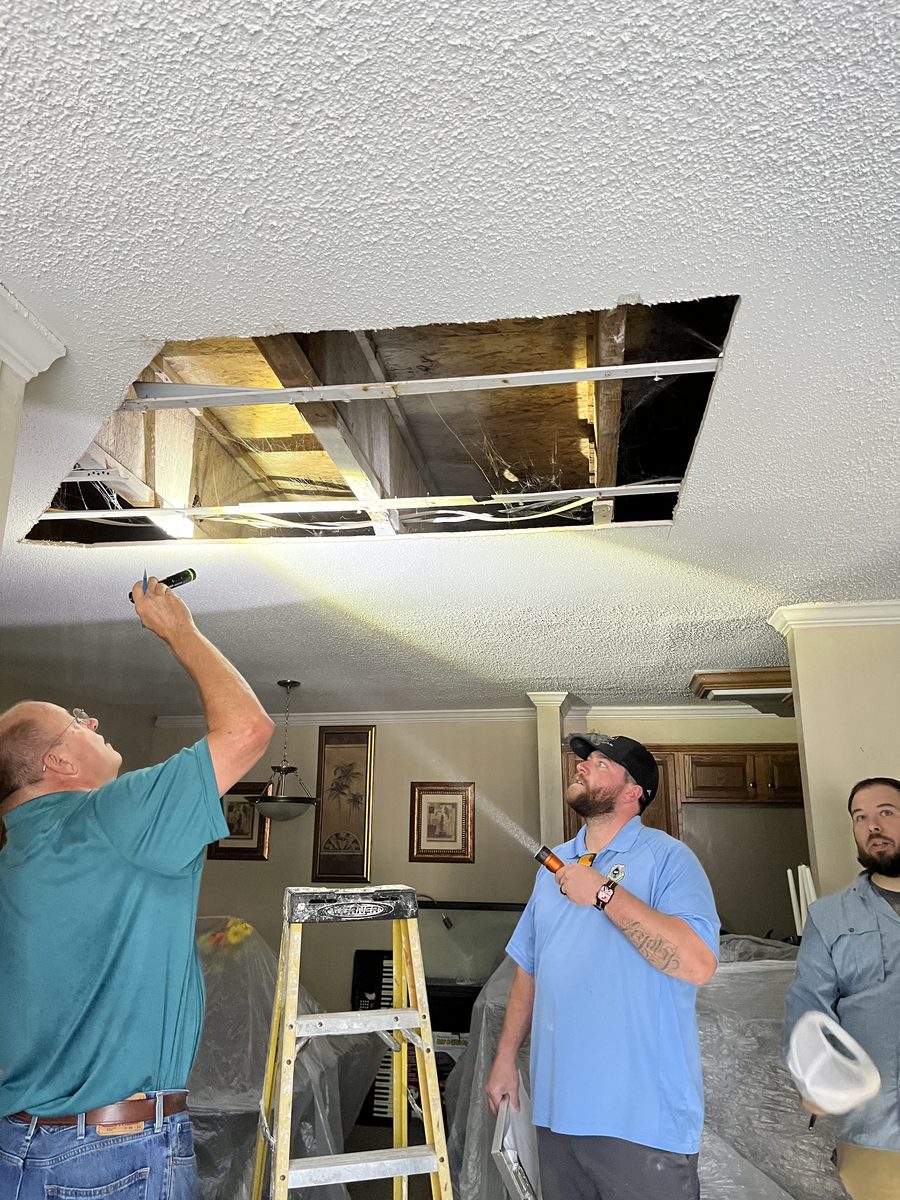
That deal did not teach me that jumping always works. It taught me to take the amount of risk that fits your ability and your appetite, and then move. Experience makes you better at predicting what will happen, and better at handling what you could not predict. Moving forward wisely in uncertainty is what most of my writing about investing is really about.
Attitude: How will I face it?
Attitude separates what happens to you from what you allow it to make of you.
Two people can face the same facts and live in different worlds because of how they carry them. Gratitude does not mean pretending hardship is not there. It means refusing to let what is missing become the only thing you can see, and refusing to let a setback become your identity. Optimism, in the version I trust, means looking for opportunity without denying the downside. Resilience means recovering without becoming bitter.
This is not positive thinking, and it is not a mood. It is choosing the most constructive interpretation that is still true.

In graduate school I lost my electrophysiology equipment to another lab. That rig was how I did my work, and it was gone. I took a few days to think through my options. I had not read the Stoics yet, but I ended up where they would have pointed me: the decision was not mine, and what I did next was. I treated it as a chance to grow, moved into a new professor’s lab, and started toward a new thesis.
Nothing about the facts changed. What changed was what I let them make of me.
And attitude is not the last step. It is there before anything happens, in what you expect. It is there during, in how you act under pressure. It is there after, in what you decide the result means.
A loop, not a list
Here is where the red car comes back.
How you carry what happens shapes what you go looking for next, and what you go looking for is what you will see. A resentful mind is primed for grievances, and it finds them. A fearful one finds danger. A grateful one notices opportunities, helpers, and lessons it would otherwise have walked past. That is selective attention again, not a goal-seeking brain circuit.
So the three are not steps you finish. They are a loop. Attention shapes what you do. What you do changes your situation. How you face the result shapes what you notice next, and the loop starts again, a little better or a little worse each time.
Ownership runs all the way around it. Own where you are: that is attention, accepting the facts without denial or excuse. Own what you do next: that is action. Own how you carry what follows: that is attitude. Curiosity runs around it too, keeping attention honest and turning action into experiments instead of gambles.
Where it shows up
A framework is only worth having if it works on real situations. Here are five where I use it.
A deal. What are the facts, rather than the pitch? What decision is actually mine? Can I accept the outcome without rewriting how good the decision was?
Health. What is my body actually telling me, measured rather than assumed? What behavior is mine to change? Can I approach getting older with gratitude instead of resentment?
Family. What is actually happening with this person right now? What is mine to repair, do, or say? Can I answer with generosity instead of defensiveness?
Failure. What happened? What do I change? Is this data, or is it identity?
A life. What deserves my attention? What will I do with the time I have? How will I receive a life I ultimately cannot control?
Most of what I write here is one of those, worked out in detail. Every Investment Is a Hypothesis is attention applied to deals. The Sugar-Free Chai Experiment is attention applied to my own health. What Are You Actually Building Wealth For? is the life question, asked about money and family.
What it is for
I do not think a meaningful life is something you can chase directly. Chasing happiness tends to scare it off. Demanding contentment tends to postpone it.
What you can do is build the conditions where those things take root. Pay attention to what is true. Do what is yours to do. Carry the result with ownership and gratitude. Then go around again.
A meaningful life is not the thing you chase. It is what grows from doing that, over and over. See clearly. Act deliberately. Live gratefully.
Tim Fergestad, Ph.D., is a scientist and investor. He writes about seeing clearly, acting deliberately, and living gratefully at TimFergestad.com. He is the founder of Oak Street Assets and host of the Phoenix Prosperity Podcast.
Nothing here is investment, legal, tax, or medical advice. It is how I think, offered in case it is useful to how you think.
Field Notes from Tim
Occasional, high-signal ideas, experiments, and things worth thinking about. I send it when I have something worth opening.
Your address is used for Field Notes and nothing else. Unsubscribe any time.