Media Kit
For hosts and producers
Someone who spent a career learning how to make claims under uncertainty, then applied that discipline to allocating his own capital.
Tim is a strong fit for audiences of investors, entrepreneurs, physicians, scientists, executives, and other high achievers. The angle is broader than another real-estate origin story. He is a molecular-neuroscience-trained scientist who became a private-market investor, and he can go tactical on evaluating a deal, discuss the earned-income-to-ownership transition, or zoom out into how people make better high-stakes decisions when the future is unknowable.
Today
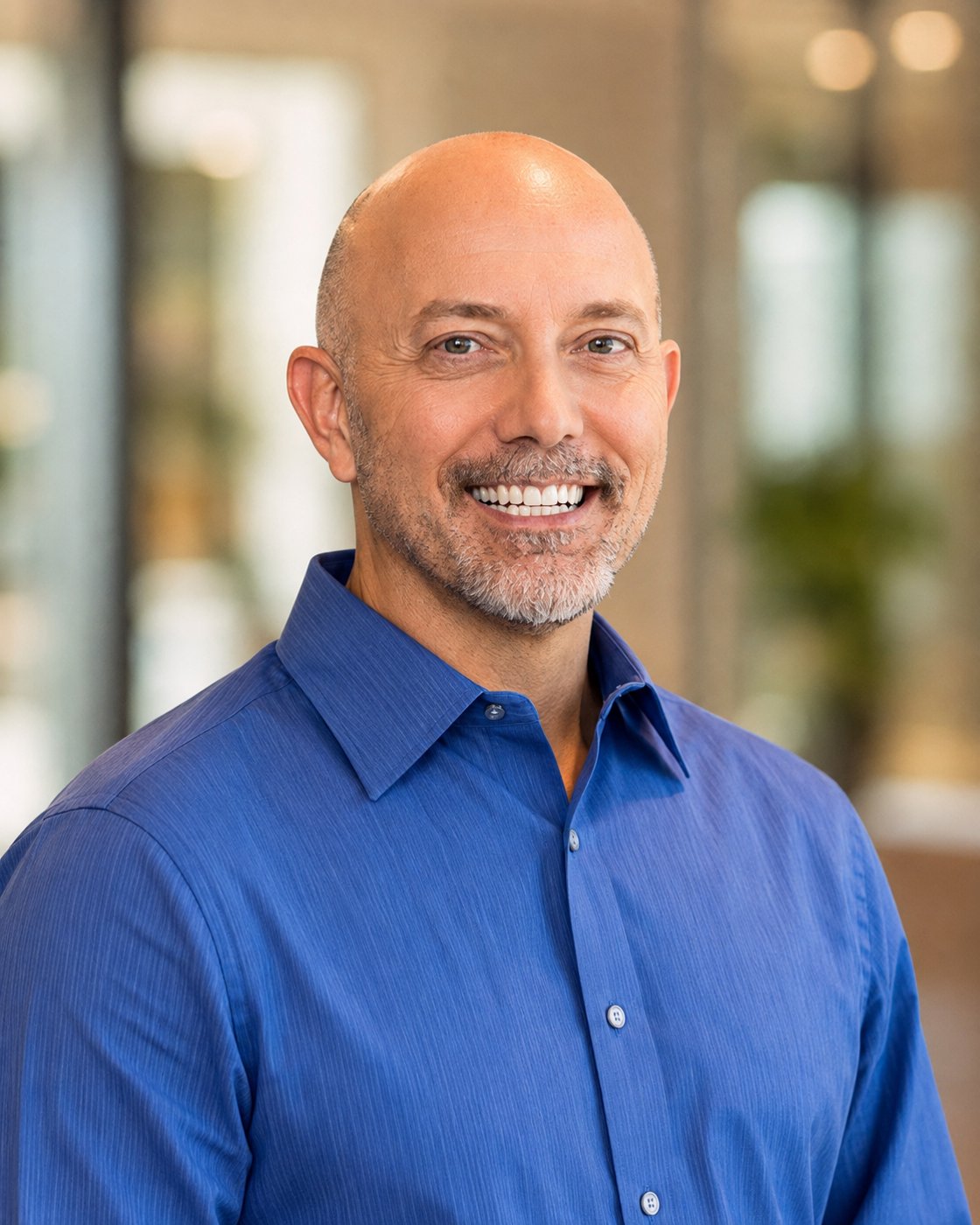
Tim is an investor and the founder of Oak Street Assets, where he invests his own capital and partners with accredited investors in selected private-market opportunities. His work has included multifamily equity, private credit, preferred equity, and real estate development. Today he focuses on investing, building durable wealth, and creating the kind of financial independence that gives him more control over his time with family and the legacy he leaves behind.
One line
Tim Fergestad, Ph.D., is a scientist and private-market investor who applies scientific thinking to investing and decisions under uncertainty.
Background at a glance
- Ph.D. in neuroscience, University of Utah School of Medicine
- Molecular neuroscience and genetics research
- Real estate spanning renovations, land, rentals, multifamily, and development
- Private-market investor across equity, preferred equity, and private credit
- Founder, Oak Street Assets
- Host, Phoenix Prosperity Podcast
Read this on air
Introduction
Dr. Tim Fergestad is a molecular-neuroscience-trained scientist turned private-market investor and the founder of Oak Street Assets. After a career in academic research, he built investing experience across real estate equity, private credit, preferred equity, and development. He also hosts the Phoenix Prosperity Podcast and explores how evidence, incentives, and ownership shape better decisions.
Conversations
Topics that work well
- Every investment is a hypothesis How scientific thinking changes the way you invest, and the five questions that turn a decision into something you can actually test. Works equally well for a general audience as how to decide well when you cannot know the outcome.
- High income is not wealth Why a large income can create the illusion of wealth, what changes when a professional starts thinking like an owner, and how a busy person begins investing without creating a second job.
- From income to ownership: what are you actually building wealth for? High-income professionals can spend decades becoming excellent earners without ever deciding what the money is supposed to accomplish. The shift from maximizing income to building ownership, optionality, family freedom, and multigenerational impact, and why legacy is more than leaving money behind.
- Do not start with the return How to evaluate a private investment before you ever look at the projected number: the operator, the incentives, the structure, the downside, and the questions that reveal more than a polished deck.
- From the lab to the capital stack The scientist-to-investor transition. What actually transfers when a technical expert moves into ownership, and what does not.
- Expanding a circle of competence Moving into new sectors without confusing curiosity with expertise, and how to tell real competence from a compelling narrative.
For the host
Questions Tim is especially good at answering
- Why do you say every investment is a hypothesis?
- What did scientific research teach you about being wrong?
- Why should investors not start by looking at the projected return?
- How do you distinguish a good deal from a good story?
- Why can high-income professionals still be financially fragile?
- What is the difference between earning money and owning productive assets?
- How do you evaluate an operator when the future is inherently uncertain?
- When should an investor venture outside his circle of competence?
- What has real-world investing taught you that science did not?
- What does a failed investment teach you that a successful one cannot?
Media
Selected appearances
Lifetime Cash Flow Through Real Estate Investing with Rod Khleif
Multifamily Is in Trouble, Here's Where the Deals Are
Where the opportunity sits in a dislocated multifamily market, distressed deals and preferred equity, evaluating operators and structures, and the evolution from active real estate into private-market investing. August 2026.
Real Estate Investor Podcast with Gary Lipsky
Think Better. Invest Better.
Scientific thinking applied to investing, the earned-income trap, operator-first evaluation, and why market psychology pushes people to buy at peaks and sit out at bottoms. August 2026.
Point of view
Why ownership matters
Tim's move toward investing was not simply a career change. It grew from a realization that professional success and income do not necessarily create control over your life. Ownership offered something different: the ability to build wealth that was not entirely dependent on his next hour of work.
That matters to him because wealth is ultimately about more than accumulation. It is about having greater control over where you spend your time, being present for the people who matter, creating opportunities for the next generation, and leaving behind something more durable than a résumé.
Biography
The longer version
Tim Fergestad earned a Ph.D. in neuroscience at the University of Utah School of Medicine, later continuing his work in the Genetics Department at the University of Wisconsin-Madison. His research focused on the molecular machinery underlying communication between nerve cells, work that trained him to isolate variables, challenge assumptions, and design experiments capable of proving his own hypotheses wrong.
While he was a scientist he was also building a life outside the laboratory. He bought and renovated properties, owned rentals in multiple states, worked in land and residential real estate, and moved gradually into larger private investments. As that portfolio grew he transitioned out of academic research and focused his capital and attention on ownership.
That work evolved from single-family real estate into multifamily syndications, private credit, preferred equity, development, and other private-market investments. Today he runs Oak Street Assets, a boutique investment firm through which he invests alongside accredited investors in opportunities he believes merit their capital. He also hosts the Phoenix Prosperity Podcast. He lives in the Phoenix area.
As his investing career developed, so did his definition of success. Building wealth mattered, but increasingly as a means rather than an end: greater autonomy over his time, more freedom to be present with his family, and the ability to create opportunities and a meaningful legacy for the next generation.
In his words
- Every investment is a hypothesis about the future.
- Better investing begins with better questions, not better predictions.
- Income creates capacity. Ownership creates optionality.
- Science did not just teach me to analyze data. It taught me how to think.
- The goal is not to eliminate uncertainty. It is to make good decisions despite it.
Booking
Invitations and enquiries
Email is the fastest route. Tell me a little about the show and the audience, and I will tell you honestly whether I am the right guest.